

H2: Discovering the Magic of Thai-Style Chicken Fried Rice
I still remember my first bite of khao pad gai on a humid Bangkok street corner years ago—the sizzle of the wok, the fragrant jasmine rice, and that bright lime kick cutting through the savory chicken. Thai-style chicken fried rice isn’t just another takeout staple; it’s a quick, bold dish that captures the heart of Thai street food. With tender chicken, smoky wok hei, and a splash of fish sauce, it delivers restaurant-quality flavor in under 20 minutes at home.
H2: What Sets Thai Chicken Fried Rice Apart from the Rest
Unlike milder versions you might find elsewhere, Thai-style chicken fried rice balances salty, sweet, and umami with a subtle char from high-heat cooking. The jasmine rice adds a floral aroma that plain long-grain can’t match, while tomatoes and a squeeze of lime bring freshness that keeps every spoonful exciting. It feels lighter yet more layered than many fried rice dishes, making it the perfect weeknight hero.
H3: Key Differences from Chinese Fried Rice
Chinese fried rice leans on soy sauce for deep color and relies on lower heat for fluffy grains, often loaded with peas and carrots. Thai khao pad gai skips heavy soy in favor of fish sauce for brighter umami, uses jasmine rice, and embraces wok hei—the smoky char from blazing heat—plus tomatoes and cucumber on the side. The result? A zesty, aromatic plate that screams Southeast Asia.
| Aspect | Thai-Style Chicken Fried Rice (Khao Pad Gai) | Chinese Chicken Fried Rice |
|---|---|---|
| Rice Type | Fragrant jasmine rice | Long-grain white rice |
| Primary Sauce | Fish sauce + oyster sauce | Soy sauce dominant |
| Heat Level | High for wok hei char | Medium for even cooking |
| Common Add-Ins | Tomatoes, lime, prik nam pla | Peas, carrots, scallions |
| Serving Style | With cucumber slices and lime wedge | Standalone |
| Flavor Profile | Salty-sour-spicy-umami | Savory and balanced |
H2: The Rich History Behind Khao Pad Gai
Thai fried rice traces its roots to central Thailand, where Chinese immigrants introduced stir-fried rice centuries ago. Locals adapted it with native ingredients like fish sauce and jasmine rice, turning it into a beloved street-food staple sold at every wok stall. Today, khao pad gai remains a quick lunch favorite across Bangkok and beyond, proving how cultures blend deliciously.
H3: Chinese Roots Meet Thai Street Food Staple
Early versions mirrored Chinese fried rice, but Thai cooks added bold flavors and high-heat techniques for that signature smokiness. By the mid-20th century, it had become everyday fare in markets and train dining cars—hence nicknames like khao pad rot fai in some regions. The chicken version, khao pad gai, evolved as a protein-packed option that’s now iconic worldwide.
H2: Essential Ingredients for Authentic Flavor
Success starts with quality staples you can find at any Asian market or online. Cold jasmine rice, thinly sliced chicken, and a simple sauce of fish sauce, oyster sauce, and a touch of sugar create the magic. Fresh garlic, onion, and green onions build the aromatic base, while tomatoes and eggs add texture and color.
H3: Why Jasmine Rice Is Non-Negotiable
Day-old jasmine rice is key because its slightly drier grains separate beautifully in the wok without turning mushy. The natural floral scent infuses every bite, setting Thai fried rice apart from plainer varieties. Cook a batch the night before and refrigerate it—trust me, this small step transforms the dish.
H3: Choosing the Right Chicken and Prep Tips
Boneless thighs or breast work best when sliced thin against the grain for maximum tenderness. A quick toss in a bit of soy or seasoning sauce before cooking keeps it juicy amid the high heat. This simple marinade ensures the chicken stays succulent rather than dry and chewy.
H3: The Role of Fish Sauce, Oyster Sauce, and Palm Sugar
Fish sauce delivers deep umami without darkening the rice, while oyster sauce adds glossy sweetness. A pinch of palm sugar balances everything and promotes caramelization. Skip these and you’ll lose the authentic Thai soul—homemade versions beat bottled shortcuts every time.
H2: Must-Have Kitchen Tools for Perfect Results
A screaming-hot wok is non-negotiable for that prized wok hei char, but a large skillet works in a pinch with extra oil. A sturdy spatula helps toss everything evenly without breaking the rice grains. Prep bowls and a sharp knife speed up the fast-paced stir-fry process.
H3: Why a Wok Is Your Best Friend
Carbon-steel or cast-iron woks retain and distribute heat like nothing else, letting you achieve restaurant-style smokiness at home. Season it properly once and it becomes a lifelong kitchen companion for Thai dishes. High sides prevent ingredients from flying out during vigorous tossing.
H2: Step-by-Step: How to Make Thai Chicken Fried Rice at Home
Gather everything before you start—the entire cook takes just 10-12 minutes once the wok is hot. This method mirrors street vendors in Thailand, pushing ingredients aside for the egg scramble before folding everything together.
H3: Step 1: Prep the Chicken
Slice 200g of chicken thinly against the grain and toss with a splash of soy sauce and a pinch of sugar. This quick marinade seasons the meat and helps it stay tender during the blast of heat. Set it aside while you chop the rest.
H3: Step 2: Mix the Signature Sauce
Combine 2 tablespoons each of oyster sauce and fish sauce (or Thai soy) with 1 teaspoon palm sugar in a small bowl. Stir until the sugar dissolves—this balanced mix coats every grain without overpowering the dish.
H3: Step 3: Heat the Wok and Start Aromatics
Add oil to a hot wok over high heat, then toss in minced garlic and sliced onion. Stir-fry for 20-30 seconds until fragrant but not burned—this builds the flavor foundation fast.
H3: Step 4: Cook the Chicken
Add the chicken and stir-fry until it turns opaque, about 1-2 minutes. Push everything to one side of the wok to make room for the egg. The high heat sears the meat beautifully.
H3: Step 5: Scramble the Egg Thai-Style
Pour beaten eggs into the empty side and scramble quickly for 20 seconds before mixing with the chicken and aromatics. This technique keeps the egg fluffy and evenly distributed.
H3: Step 6: Add Rice and Sauce
Break up 3-4 cups of cold jasmine rice and add it to the wok. Pour in the sauce and stir-fry vigorously for 2 minutes until every grain is coated and slightly charred.
H3: Step 7: Finish with Tomatoes and Greens
Toss in tomato wedges and green onion pieces in the final minute. They add juicy bursts and fresh color without overcooking. A grind of white pepper ties it all together.
H2: Common Mistakes to Avoid
Even experienced cooks slip up when rushing. Using hot rice is the top culprit for gummy results, and overcrowding the wok kills the char. Low heat also means no wok hei magic.
H3: Using Fresh Rice Instead of Day-Old
Freshly cooked rice releases too much starch and turns sticky. Always plan ahead and chill it overnight for separate, chewy grains that fry beautifully.
H3: Overcrowding the Wok
Too many ingredients at once drop the temperature and create steam instead of sear. Cook in batches if scaling up, or use the largest wok you own.
H2: Pro Tips for Restaurant-Quality Results
- Always work over maximum heat and keep ingredients moving.
- Add a dash of chili flakes or fresh Thai chilies for customizable heat.
- Finish with fresh cilantro, lime wedges, and prik nam pla on the side.
- Leftovers reheat wonderfully in the wok with a splash of water.
H2: Nutritional Profile and Health Benefits
One generous serving delivers about 450-550 calories with lean protein from chicken and fiber from veggies. Jasmine rice provides quick energy, while fish sauce adds minerals without heavy calories. It’s lighter than many takeout options when you control the oil.
Pros and Cons of Thai-Style Chicken Fried Rice
Pros:
- Quick to prepare with pantry staples
- Customizable protein and veggie options
- Naturally gluten-free when using tamari
- High in satisfying umami flavor
Cons:
- Requires day-old rice planning
- High-heat cooking can be smoky indoors
- Fish sauce smell during prep (worth it!)
- Not ideal for very low-sodium diets
H2: Creative Variations to Try
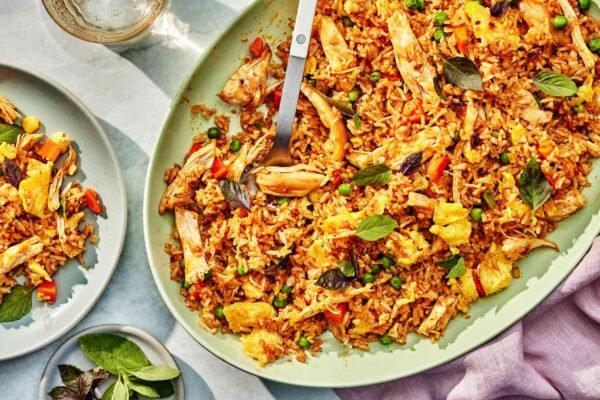
Once you master the base, swap proteins or add seasonal greens. Thai basil chicken fried rice swaps holy basil for extra aroma, while pineapple versions bring sweet-tart contrast. Shrimp or tofu versions keep it flexible for any diet.
H3: Thai Basil Chicken Fried Rice Twist
Stir in a handful of holy basil at the end for peppery fragrance. It turns the dish into a hybrid of khao pad and pad kra pao—pure comfort with a spicy kick.
H3: Vegetarian or Vegan Adaptations
Tofu or mushrooms replace chicken perfectly. Use mushroom oyster sauce and tamari for full flavor without animal products while keeping the Thai spirit intact.
H2: Serving Suggestions for a Complete Thai Meal
Plate it family-style with cucumber slices, tomato wedges, and a bowl of prik nam pla. Pair with tom yum soup or fresh spring rolls for balance, or keep it simple alongside satay skewers. A cold Thai iced tea cuts the richness beautifully.
H2: Where to Source Authentic Ingredients
Most Asian supermarkets stock jasmine rice, fish sauce, and oyster sauce affordably. Online retailers like Amazon offer palm sugar and Thai chilies with next-day delivery. For the freshest experience, visit your local Thai market and ask the owner for recommendations.
H2: People Also Ask About Thai Chicken Fried Rice
These common questions pop up in searches and reflect exactly what home cooks wonder.
H3: How do you make Thai chicken fried rice authentic?
Use cold jasmine rice, fish sauce instead of heavy soy, and cook over blazing wok heat. Serve with lime and prik nam pla for that true street-food taste.
H3: What is the difference between Thai and Chinese fried rice?
Thai versions emphasize fish sauce, jasmine rice, and high-heat char, while Chinese rely more on soy and lower heat for fluffier results.
H3: Can I use freshly cooked rice?
Technically yes, but it will be sticky and clumpy. Spread it on a tray and chill or freeze briefly if you’re in a pinch.
H3: Is Thai chicken fried rice spicy?
The base recipe is mild, but adding fresh Thai chilies or chili paste lets you dial the heat exactly to your liking.
H2: Frequently Asked Questions
H3: Can I make Thai-style chicken fried rice ahead of time?
Yes—cook it fully, cool quickly, and refrigerate up to three days. Reheat in a hot wok with a splash of water to revive the texture.
H3: What’s the best protein substitute for chicken?
Shrimp, beef, or firm tofu all shine. Adjust cooking time slightly so nothing overcooks in the intense heat.
H3: How do I store leftover fried rice?
Cool it completely, then store in an airtight container in the fridge for up to three days or freeze for one month.
H3: Do I need a wok or can I use a skillet?
A skillet works fine with a bit more oil, but a wok gives superior char and even heat distribution.
H3: Is this recipe gluten-free?
It can be—choose gluten-free oyster sauce and tamari instead of regular soy. Fish sauce is naturally gluten-free.
H2: Why You Need to Try This Recipe Tonight
Thai-style chicken fried rice brings restaurant magic to your kitchen with minimal fuss and maximum flavor. Once you nail the technique, you’ll ditch takeout forever. Grab that cold rice from the fridge, fire up the wok, and let the sizzle begin—your taste buds will thank you.


Leave a Reply